The Sandbox: July 2026
Why Early Care and Education Is a Business Imperative - A Conversation With Board Member Kevin Beverly
By Emma Covas
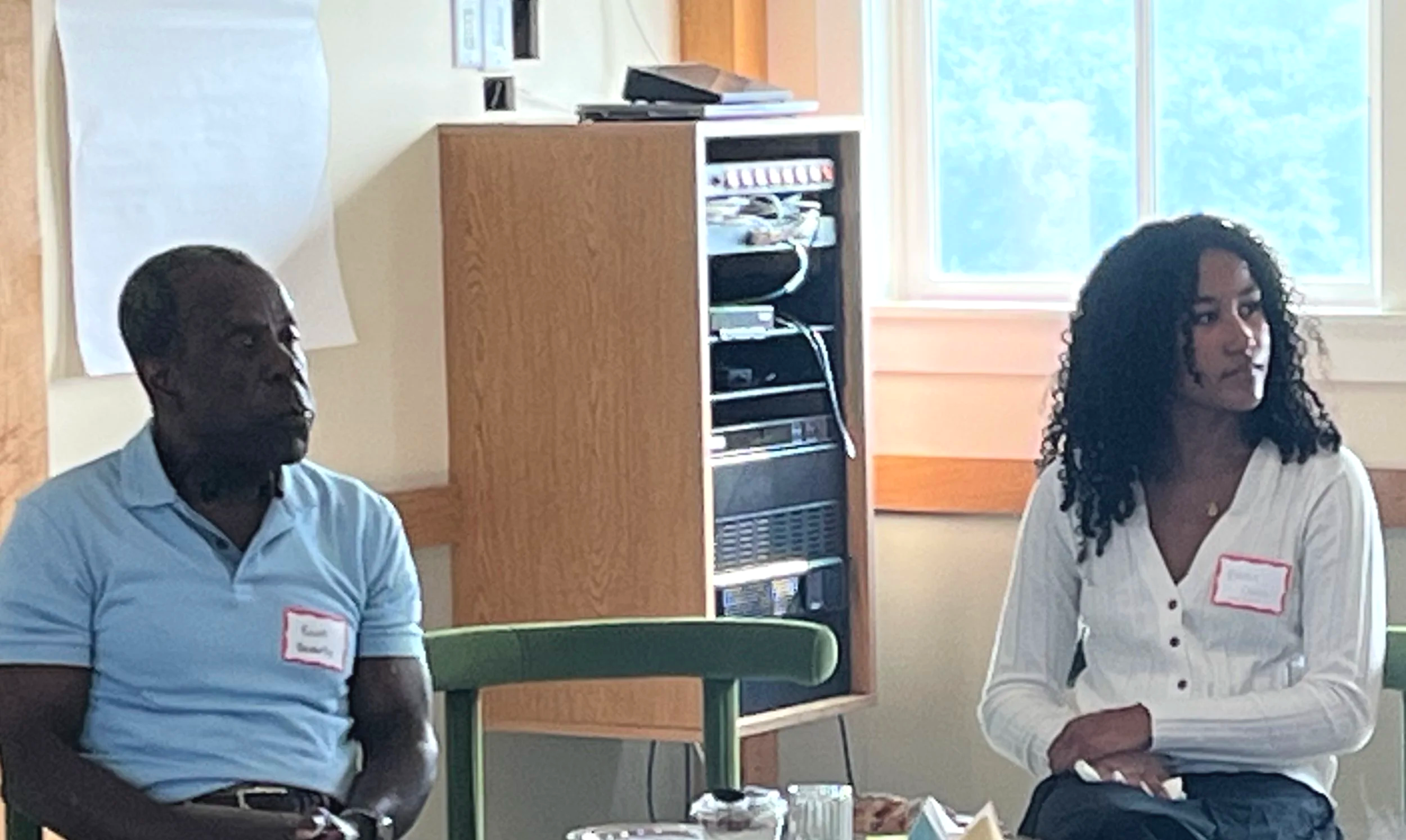
Kevin Beverly (left) and Emma Covas at the Alliance’s business roundtable in July 2026
This summer, I interned with the Montgomery County Children’s Opportunity Alliance, where I’ve had the opportunity to speak to people from every corner of Montgomery County. One theme emerged in nearly every conversation: early care and education (ECE) isn’t simply a service for families and children — it’s the infrastructure that allows our workforce and economy to function. Without reliable and affordable child care, parents can’t work, businesses struggle to retain employees, and our community loses economic potential. To better understand these connections, I spoke with Alliance Board member Kevin Beverly, former President & CEO of Social & Scientific Systems. As both a business leader and longtime advocate for early childhood, Kevin offered a compelling perspective on why investing in ECE is one of the smartest economic decisions Montgomery County can make.
The following are excerpts from my conversation with Kevin:
Why should ECE matter to the business community?
Businesses often think child care is a family issue. It isn’t – it’s a business issue. When families can’t afford or access high-quality child care, it’s an economic hardship for the entire community. When parents have to leave the workforce to care for children, businesses spend more on recruiting and training new employees. Businesses in Montgomery County should redirect their focus toward figuring out how to support employees to improve retention. An investment in families means less money spent on the constant cycle of recruiting and hiring, and ends up paying for itself. One example of this is in Quebec, which has a $10-a-day child care program. Supporting working families isn’t charity – it’s a workforce strategy.
What do you say to people who believe we are already investing in education appropriately?
We often separate education and economic development, but they are deeply connected. Many times, when people say “education,” they are thinking of the K-12 system. However, nearly 90% of brain development happens before age 5. Those early years shape literacy, problem-solving, emotional regulation, and executive function – the very skills employers look for decades later. If we invest in these early years, we’re going to see the impact of that investment in the later years, in high school, college, and beyond. Otherwise, we end up playing catch-up once children enter school, which costs far more than an initial early investment that sets children up for success from the start. When we underinvest during the early years, we aren’t saving money – we’re simply shifting costs downstream.
Our current child care system isn’t really a system at all – it’s a patchwork held together by extraordinary heroes, including underpaid educators, overextended families, and ECE advocates in the community. As a county, we have to be willing to admit that fixing this system means not relying solely on our heroes. Heroism is admirable, but it is not sustainable public policy. We must rebuild the foundation of the system, so it supports and benefits everyone. This means investing money and resources. Research shows that if we support children and families in these early years, more parents stay in the workforce, public schools spend less money on remediation, and our kids grow up with the tools they need to launch successful careers.
What can employers do to support ECE?
Business leaders have tremendous political power to influence policymakers. If employers consistently identify child care as essential economic infrastructure, elected officials will pay attention. I want to see Montgomery County businesses advocating for ECE directly. That includes advocating for higher wages for educators, policies that make it easier to open, maintain, and expand child care programs, and demanding greater accountability and budget transparency so that people understand how our public dollars are being spent. If we want to increase access to child care in our system, we need public policies that actively adapt to current needs, and businesses can push for this.
My conversation with Kevin left me with a clear understanding that our system can no longer rely on the hero mentality – we need a collective commitment to system reform. Early care and education also matters to every employer, every taxpayer, and every resident of Montgomery County. Treating child care like an afterthought isn't a neutral stance. It's a choice, and it's an expensive one. The question isn’t whether we can afford to invest in ECE. It’s whether we can afford not to.